Independent Referral Platform
Connects Reno and Washoe County property owners with independent, licensed Nevada roofing contractors. Strictly zero web forms. Direct phone dispatch.
Emergency Roof Tarping & High-Wind Stabilization in Reno, NV
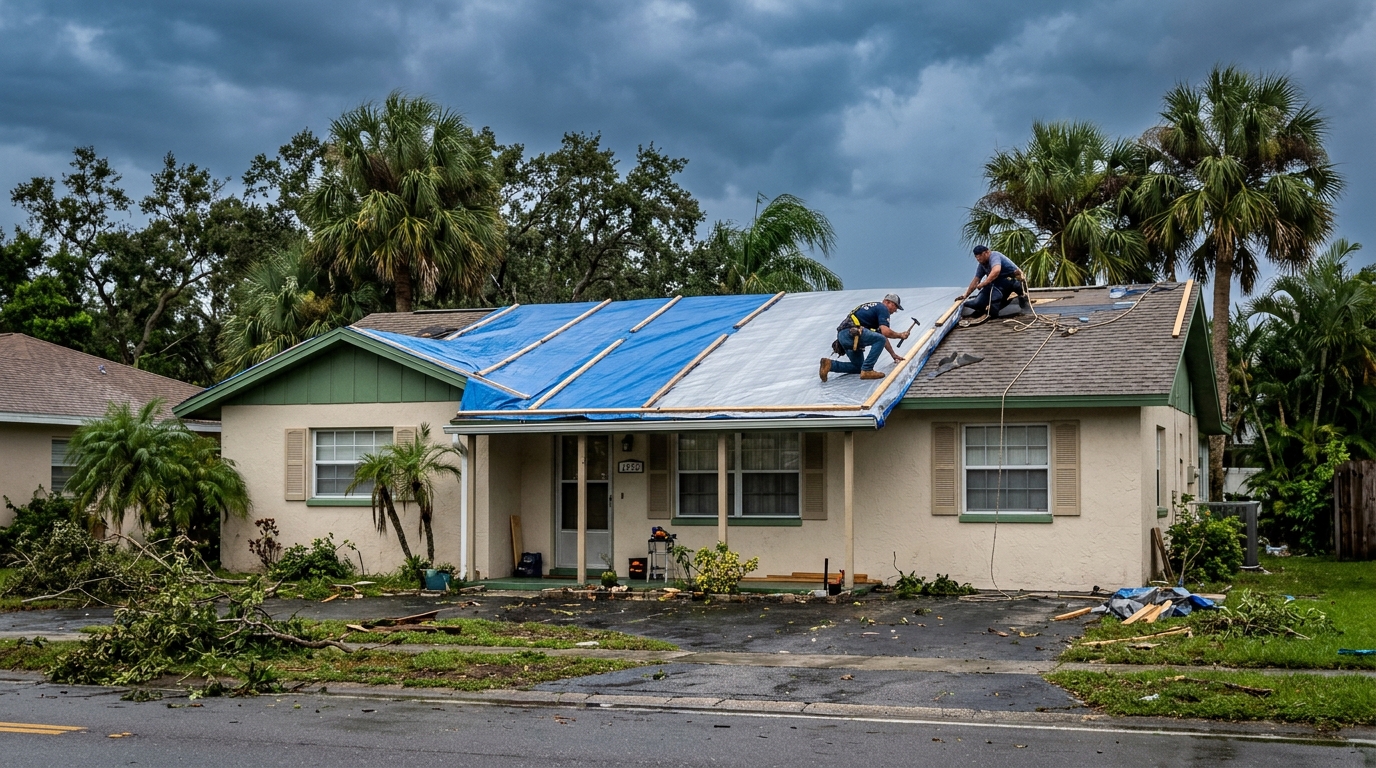
When severe downslope Washoe Zephyr winds tear through the Truckee Meadows at speeds exceeding 70 to 80 MPH, residential and commercial roofs suffer extensive mechanical damage. Asphalt shingles are ripped from their nail patterns, ridge caps are torn away, and bare plywood sheathing is left completely exposed to incoming Sierra snow squalls. Our emergency dispatch desk connects you with on-call licensed Nevada roofing contractors prepared with heavy-duty 10-mil reinforced polyethylene tarps and dimensional lumber battens to weatherproof your property immediately.
Protocol 4: Direct Connection to Licensed NSCB Class C-15 Contractors across Reno, Sparks, and Washoe County.
1. Regional Microclimate Dynamics & Severe Storm Exposure in Reno
The Washoe Zephyr is a notorious meteorological phenomenon caused by cold, dense air spilling eastward over the Sierra Nevada crest into the Reno basin. These downslope winds generate extreme aerodynamic uplift forces along roof eaves, rakes, and ridges. In winter, cold temperatures render asphalt shingle sealant strips brittle and vulnerable to wind peel. Once a windward shingle tab is lifted, aerodynamic drag creates a cascading peel failure, stripping entire slopes and exposing structural decking to driving rain and heavy wet snow. In commercial buildings, positive pressure beneath eaves combined with negative pressure across roof membranes can rip entire perimeter parapet caps loose.
Immediate damage assessment involves inspecting the structural deck integrity, attic truss anchoring, and perimeter drip edges. Dispatched specialists evaluate whether compromised decking can safely support emergency tarp anchoring without risk to roof rafters. High-resolution digital photographic documentation is captured from ridge to eave before any materials are deployed, establishing incontrovertible visual evidence for homeowner insurance claims. Technicians also perform moisture probe testing across exposed sheathing to quantify whether wet-insulation abatement will be required during subsequent interior restoration phases.
3. Step-by-Step Substrate Restoration Methodology
Proper high-wind emergency tarping requires rigid mechanical attachment; sandbags, bricks, and loose perimeter nails will fail instantly under continuing Sierra gusts. Dispatched crews use heavy-duty 10-mil woven polyethylene tarpaulins with ultraviolet protection. The upper edge is tucked securely beneath undamaged ridge cap shingles; the perimeter edges and field seams are sandwiched tightly between double-wrapped 2x4 SPF lumber battens fastened directly into structural rafters with 3-inch exterior structural screws. This eliminates wind flap and prevents water from migrating beneath the tarp membrane. Intermediate batten runs are installed every six feet across large roof facets to prevent billow tension during sustained mountain gusts.
4. State Energy Efficiency Codes & Contractor Licensing Compliance
All emergency stabilization procedures comply with City of Reno and Washoe County emergency stabilization guidelines, OSHA Fall Protection Standards (29 CFR 1926.501), and the Nevada State Contractors Board regulations. Emergency tarping preserves your insurance policy rights under the 'duty to mitigate damages' clause without altering evidence needed by adjusters. Dispatched contractors provide comprehensive dispatch verification slips documenting the precise timestamp of stabilization to protect the insured against secondary denial claims.
Emergency roof tarping is an interim defense designed to preserve the interior living space while permanent insurance scoping and contractor scheduling occur. Once weather conditions stabilize, contractors conduct a comprehensive Haag-engineering forensic review to specify full shingle replacement, high-wind nail patterns, and enhanced starter strip installation. Property owners should avoid walking on tarped roof surfaces, as polyethylene membranes become extremely slippery when wet or covered with light frost.
Need Immediate Roof Repair Dispatch in Reno or Washoe County?
Our dispatchers connect you directly with certified on-call roofing crews ready with commercial de-icing, thermal cameras, and emergency tarping materials. Zero waiting for web form replies.